
Non-professional furnished rentals
Changes tax regime non-commercial rented accommodation
By: Anne Frede, Edouard De Raismes
30 Jun 2026 3 min read
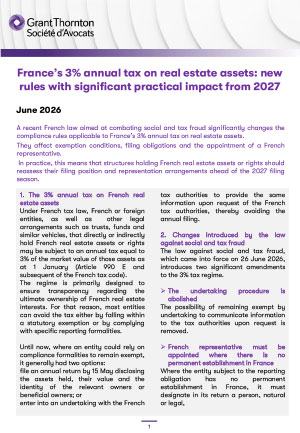
A recent French law aimed at combating social and tax fraud significantly changes the compliance rules applicable to France’s 3% annual tax on real estate assets.
They affect exemption conditions, filing obligations and the appointment of a French representative.
In practice, this means that structures holding French real estate assets or rights should reassess their filing position and representation arrangements ahead of the 2027 filing season.
Under French tax law, French or foreign entities, as well as other legal arrangements such as trusts, funds and similar vehicles, that directly or indirectly hold French real estate assets or rights may be subject to an annual tax equal to 3% of the market value of those assets as at 1 January (Article 990 E and subsequent of the French tax code).
The regime is primarily designed to ensure transparency regarding the ultimate ownership of French real estate interests. For that reason, most entities can avoid the tax either by falling within a statutory exemption or by complying with specific reporting formalities.
Until now, where an entity could rely on compliance formalities to remain exempt, it generally had two options: file an annual return by 15 May disclosing the assets held, their value and the identity of the relevant owners or beneficial owners; or enter into an undertaking with the French tax authorities to provide the same information upon request of the French tax authorities, thereby avoiding the annual filing.
The law against social and tax fraud, which came into force on 26 June 2026, introduces two significant amendments to the 3% tax regime.
Where the entity subject to the reporting obligation has no permanent establishment in France, it must designate in its return a person, natural or legal, tax resident in France or having its registered office in France, authorised to receive on its behalf all communications, procedural documents and notifications from the French tax authorities in connection with the 3% tax audit process.
If no such representative is appointed, the legal entity closest to the French real estate assets or rights in the ownership chain and known to the French tax authorities is deemed authorised to receive those communications, whether or not it is itself exempt.
These amendments require all entities holding French real estate assets or rights to review their 3% tax position now if there are exempt according to a compliance formality.
In practical terms:
This point should not be underestimated. The representative must be able to receive, monitor and react promptly to all correspondence from the French tax authorities. If deadlines are missed, the entity may lose its exemption and become liable to the 3% tax. In the absence of a properly appointed representative, the deemed recipient may not react in time, creating a significant procedural and tax risk.
A timely review of the structure, the applicable exemption conditions and the filing can therefore avoid unnecessary risk and administrative friction.
If you hold French real estate directly or indirectly, our team can help assess the impact of the reform and support the steps needed to secure compliance.






Tax regime non-resident sport work France
loi financement sécurité sociale 2026 (« LFSS26 »), promulguée le 30 décembre 2025 publiée au Journal officiel 31 décembre 2025, adoptée, marqué par divergences persistantes entre Assemblée nationale et Sénat.
